| Position: | Associate Professor | |
| Projects: | BILPA | |
| Email: | ||
| Room: | Physics West 324 |
| Position: | Associate Professor | |
| Projects: | BILPA | |
| Email: | ||
| Room: | Physics West 324 |
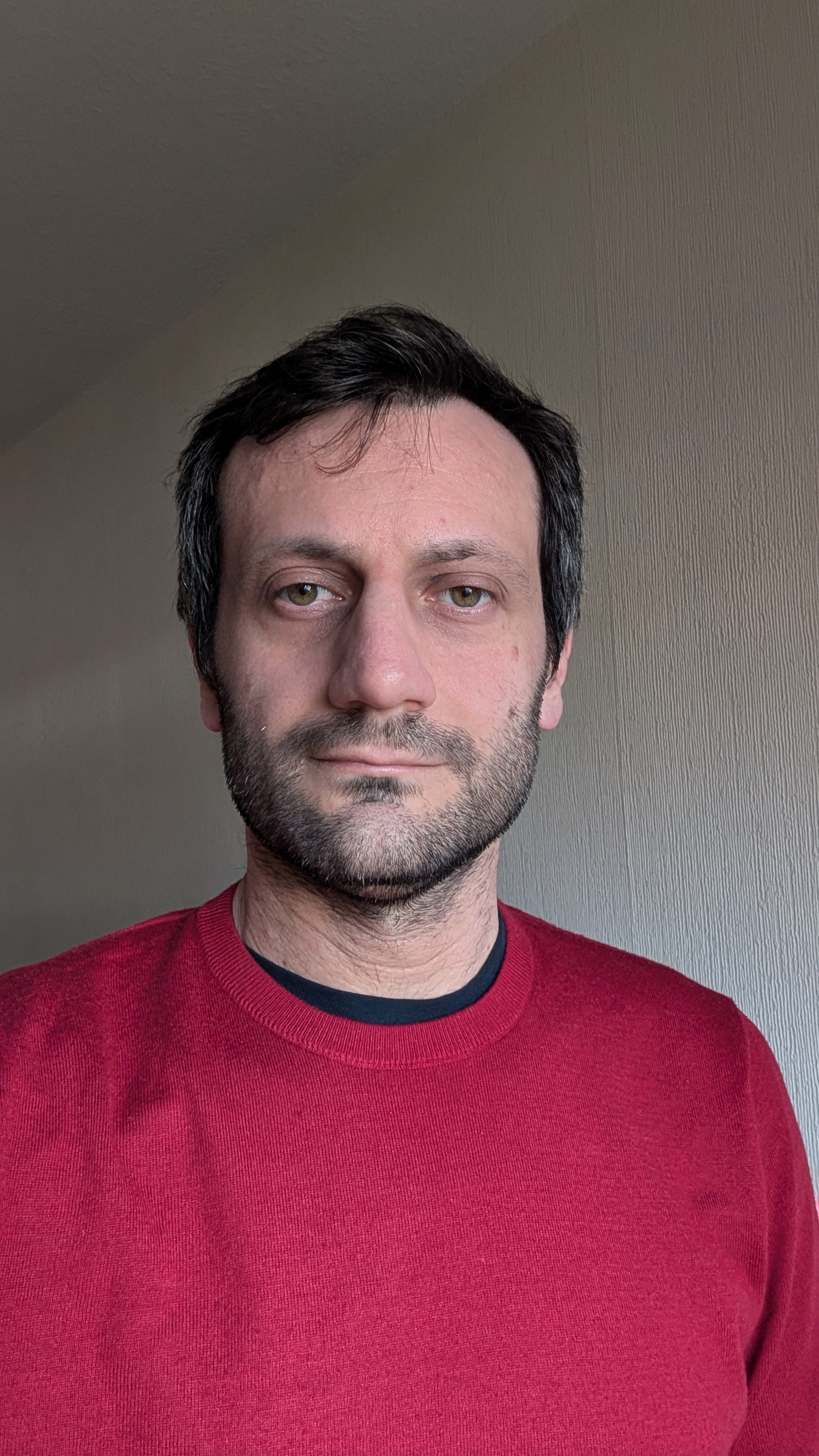
Lorenzo Paolozzi's research focuses on the design of radiation detectors and front-end electronics with ultra-fast time resolution. During his time at CERN and the University of Geneva, he contributed to the development of the first silicon pixel detectors integrated in commercial SiGe BiCMOS technology, demonstrating that a time resolution of 20 ps is achievable for minimum ionising particles without internal avalanche gain. He later improved this device by introducing controlled impact ionisation with the novel concept of the Picosecond Avalanche Detector (PicoAD), a backside-illuminated device for photons and ionising radiation with full fill-factor gain and 10 ps time capability that can be easily integrated into existing CMOS designs. While at CERN, he also served as project leader for the design, development and installation of the high-granularity preshower detector of the FASER experiment, based on monolithic silicon pixel sensor technology.
His research on radiation detectors also extends to other solid-state materials, including diamond detectors and gallium arsenide, as well as gas detectors. He also served as a detector expert in the operation and Phase-3 upgrade of the Resistive Plate Chambers of the Muon Spectrometer for the ATLAS experiment at CERN.
In January 2026 Lorenzo started his position as Associate Professor of Silicon Detector Instrumentation for Particle Physics at the University of Birmingham, where he coordinates the activities of the Birmingham Laboratory for Physics and Applications, contributing to the ATLAS upgrade programme at CERN and to the detector development programme for ePIC at BNL. He also leads research on new detector technologies and is currently part of a collaboration with the Group of Applied Physics at the University of Geneva to design new electronic techniques to scale the readout of superconducting nanowires for quantum applications.